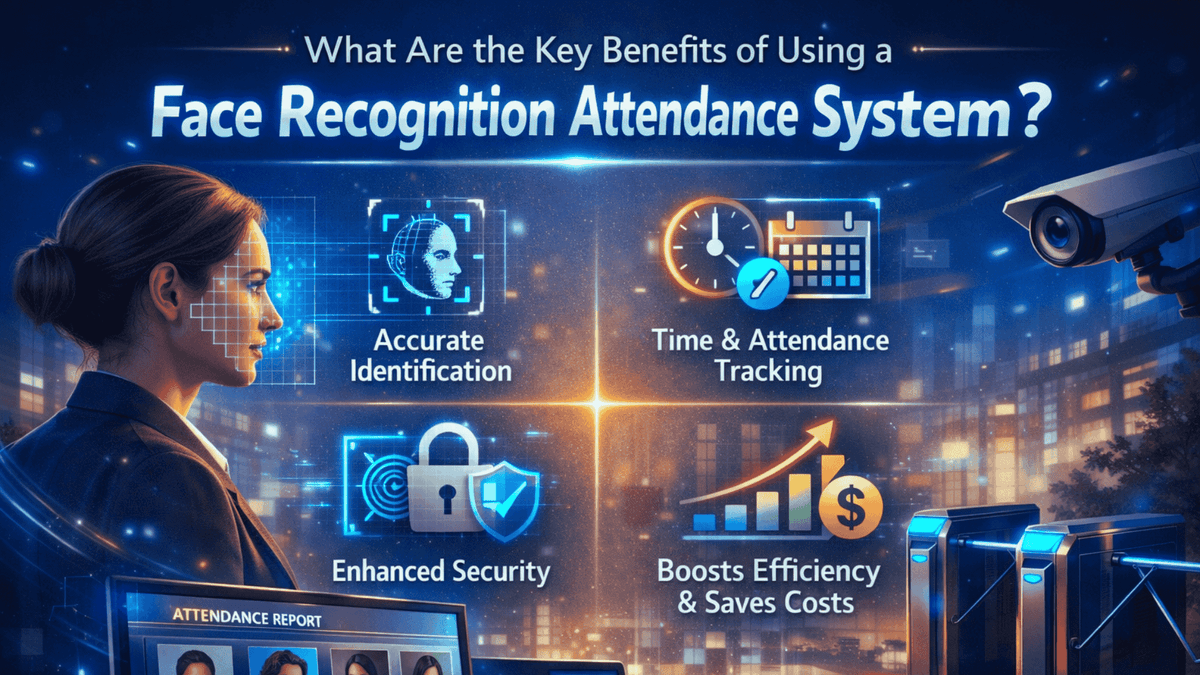
Workplace attendance tracking has undergone significant evolution with the advancement of biometric technologies. Traditional methods such as manual registers, punch cards, and ID swipes often create inefficiencies, inaccuracies, and administrative burden. A face recognition attendance system offers a modern alternative by using artificial intelligence to identify employees and record attendance automatically. This technology not only improves accuracy but also simplifies workforce management. As organizations continue to adopt digital solutions, understanding the benefits of the face recognition attendance system helps employers and employees adapt to more reliable and efficient processes.
A face recognition attendance system uses biometric technology to identify individuals based on their unique facial features. Cameras capture an image of the employee’s face, and the system compares it with stored data to confirm identity. Once verified, attendance is recorded automatically with accurate timestamps.
Unlike traditional attendance methods, this system does not require physical contact, cards, or manual input. It uses algorithms to detect facial patterns, making it difficult to manipulate or falsify records. This automation ensures that attendance tracking becomes seamless and consistent across different workplace environments.

One of the primary benefits of face recognition attendance systems is improved accuracy, which also supports effective time management techniques. Manual systems often lead to human errors, such as incorrect entries, missed records, or intentional manipulation. By automatically recording attendance based on verified identity, face recognition technology helps organizations save time and apply better time management techniques across workflows.
It also helps prevent practices such as buddy punching, where one employee marks attendance for another. Since facial recognition requires the physical presence of the individual, it ensures that attendance records reflect actual employee activity. This leads to more reliable data for payroll processing and workforce management decisions.
Face recognition attendance systems significantly reduce the time spent on attendance tracking. Employees do not need to wait in line to punch cards or sign registers. Instead, attendance is recorded instantly when they enter or leave the workplace.
This efficiency also benefits administrative teams. HR personnel no longer need to verify attendance manually or correct errors. Automated systems generate reports quickly, allowing managers to focus on more strategic tasks. Over time, this reduces administrative workload and improves overall operational efficiency.
Security is another important advantage of face recognition attendance systems. Since facial features are unique to each individual, unauthorized access becomes much more difficult. The system ensures that only authorized personnel can mark attendance or access certain areas.
This technology can also integrate with access control systems, allowing organizations to manage entry to restricted locations. By linking attendance with identity verification, companies create a safer and more controlled work environment. This is particularly useful in industries that require strict access monitoring.

With the rise of remote and hybrid work, tracking attendance for secure remote workers has become more complex. Face recognition systems can use cameras on laptops or mobile devices, enabling employees to mark attendance from any location safely.
This flexibility helps organizations maintain accountability while supporting modern work arrangements. Digital attendance records provide clear visibility into employee work patterns. Some workforce management solutions, such as EmpMonitor, include attendance tracking features that complement broader productivity monitoring tools. These integrations help organizations maintain consistent attendance data across different work environments.